
If you’ve ever held a gold coin or bar and wondered whether it’s the real deal, you’re not alone. Gold purity testing is one of the most common concerns for anyone buying or selling precious metals. The good news is that you don’t need a professional lab to get a strong sense of whether your gold is authentic and what karat it might be. Several straightforward methods can be done right at home with minimal equipment. Some are more conclusive than others, so understanding which tests work best — and their limitations — will save you time, money, and frustration.
Understanding Gold Purity Before You Test
Before jumping into the methods, it helps to understand what gold purity actually means. Gold purity is measured in karats, with 24 karat (24K) representing pure gold. Common purities you’ll encounter include 10K, 14K, 18K, and 22K, each containing a different percentage of pure gold mixed with other metals like silver, copper, or zinc. The higher the karat, the more gold the piece contains.
You might also see purity expressed as a decimal millesimal fineness — for example, .999 fine gold is 99.9% pure, which is the standard for most investment-grade coins and bars. Understanding these numbers gives you a baseline before you start testing, because some methods will give you a rough range rather than an exact karat reading.
Method 1: The Hallmark and Stamp Check
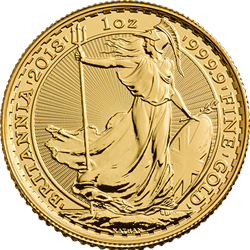
The simplest starting point is to look for a hallmark or purity stamp on the piece. Legitimate gold jewelry and bullion products are typically stamped with their karat or fineness. On jewelry, look for small numbers like 10K, 14K, 18K, or 585, 750, and 999 stamped in an inconspicuous spot. On bullion coins and bars, the purity is usually clearly engraved or printed by the mint.
Keep in mind that stamps alone are not foolproof proof of authenticity. Counterfeit pieces can carry convincing-looking hallmarks. Use the stamp as a starting point, not a final verdict. If the stamp looks uneven, smeared, or suspiciously deep or shallow compared to what you’d expect, that’s a reason to investigate further.
Method 2: The Magnet Test
Gold is not magnetic. A strong rare-earth magnet — the kind you can find at any hardware store — is a quick and easy screening tool. Hold the magnet close to your gold piece. If the piece is strongly attracted to the magnet, it contains a significant amount of ferrous (iron-based) metal and is almost certainly not gold or is heavily plated over a base metal core.
However, a piece that doesn’t stick to the magnet isn’t automatically pure gold either. Many non-gold metals like copper, aluminum, and lead are also non-magnetic. Think of this test as a first-pass filter: it can rule out obvious fakes quickly, but it can’t confirm authenticity on its own.
Method 3: The Density and Weight Test
Gold is one of the densest metals on Earth, with a density of approximately 19.3 grams per cubic centimeter. This physical property makes a weight-and-volume test surprisingly reliable. You’ll need a precise digital scale and a container of water. Weigh the gold piece first, then gently lower it into the water using a thin thread and measure the water displacement. Divide the weight by the volume of water displaced to get the density.
If your result is close to 19.3 g/cm³, the piece is likely pure gold. Lower-karat gold alloys will have a lower density because of the other metals mixed in, but the result will still be notably higher than most common base metals. Tungsten is a notable exception — it has a density close to gold, which is why tungsten-core fakes exist — so this test should always be paired with at least one other method.
Method 4: The Acid Test (Scratch Test)
The acid test is one of the oldest and most reliable home methods for testing gold purity. You’ll need a testing stone (a flat black touchstone) and a set of acid testing solutions, which are sold specifically for this purpose at jewelry supply stores. Rub the gold piece across the stone to leave a small gold streak, then apply a drop of nitric acid to the streak. Different karat testing acids are used to narrow down the purity range.
Pure or high-karat gold will show little to no reaction to the acid. Lower-karat gold or base metals will dissolve or change color. It’s important to handle acid testing solutions carefully — wear gloves and eye protection and work in a well-ventilated area. This test is more informative than the magnet or visual inspection, but it does remove a tiny amount of material from the surface of the piece.
Method 5: The Ceramic Scratch Test
An unglazed ceramic tile or plate can serve as a quick and non-destructive screening tool. Drag the gold piece lightly across the surface of the ceramic. Real gold will leave a gold-colored streak. Most fake gold pieces — especially those made of pyrite (fool’s gold) — will leave a black or dark streak instead.
This method is best suited for identifying obvious fakes rather than confirming karat purity. It won’t tell you the difference between 14K and 18K gold, but it can quickly expose pieces that aren’t gold at all. Keep in mind it may leave very slight surface marks on softer pieces, so use minimal pressure.
Method 6: The Float Test
Because gold is so dense, it will sink rapidly in water. Drop your piece into a glass or bowl of water. Real gold sinks immediately and cleanly. Pieces that float or sink slowly likely have a lower density than gold and may be fake or heavily alloyed.
This is a rough test at best — it’s most useful for larger, heavier pieces where the density difference is more obvious. For small, lightweight items like thin chains or earrings, this test may not provide meaningful results.
Method 7: Professional XRF Testing and When to Go Beyond Home Methods
Home tests are valuable screening tools, but none of them replace professional verification — especially when significant money is involved. X-ray fluorescence (XRF) analyzers are used by professional dealers to provide non-destructive, highly accurate readings of a piece’s exact metal composition. Many reputable dealers offer this service.
When you purchase bullion from a trusted source like Absolute Bullion, you’re buying products that have already been authenticated and sourced from recognized mints and refiners, which removes much of the uncertainty. If you have gold you’ve received as a gift, inherited, or purchased elsewhere and you need a definitive answer, seeking a professional assay or XRF test is always the most reliable path.
Putting It All Together
No single home test is a complete guarantee of gold authenticity, but combining several methods — checking the stamp, running the magnet test, measuring density, and using an acid test kit — gives you a much stronger picture. Think of these tests as layers of confidence rather than isolated verdicts. The more tests a piece passes, the more likely it is to be genuine.
Whether you’re testing a piece you already own or thinking about your next purchase, buying from verified dealers is always your safest option. Visit absolutebullion.com to browse authenticated gold coins, bars, and rounds at current spot price, and take the guesswork out of gold ownership from the very beginning.